The insurers who will capture disproportionate value over the next decade won't be defined by investment strategy alone, but by their ability to execute on that strategy. Execution increasingly depends on having a unified view of data across the entire portfolio.
Insurance portfolios have fundamentally changed. According to Goldman Sachs' 2025 Insurance Survey, 62% of insurance CIOs and CFOs plan to increase private markets allocations within the next year, while regulatory requirements multiply across jurisdictions. In this environment, unified data architecture has become the lasting competitive advantage.
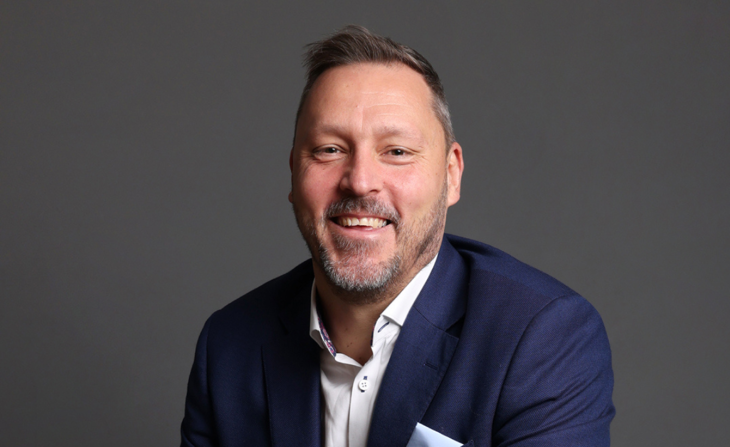
Dean McIntyre: We still use the term "alternatives," but the reality has shifted dramatically. Private markets (private equity, debt, infrastructure, and real estate) are no longer peripheral allocations but core portfolio components. As the Goldman Sachs data shows, this shift is accelerating globally. In an environment where traditional alpha sources are compressed, these investments have moved from optional to essential.
The operational challenge is significant: managing illiquid assets with the same rigour as liquid instruments while maintaining portfolio visibility for asset-liability matching. Insurance portfolio management now requires a complete picture: assets, liabilities, cash flows, and risk integrated across both public and private holdings. This is what we call the "total portfolio view".
We’re integrating risk, liability, and the entire investment process into one unified platform, giving clients a real-time unified view across their complete portfolio.
Dean: Everyone in the market claims to have an IBOR or at least has an understanding of what it is. However, there's a fundamental architectural difference between a native IBOR built from the ground up and one assembled by stitching together multiple systems.
The architecture matters
Ours is a unified data layer with real-time accessibility, not reconciled across disparate systems. This eliminates reconciliation debates that plague fragmented systems. It enables you to get straight to the investment decision.
You're not questioning whether the data is correct; you're making the investment decision. That capability matters increasingly when managing complex portfolios with 60% in private markets alongside liquid holdings. You need the same data confidence across all asset types to make effective asset-liability decisions.
From theory to practice
As a former Performance and Risk Analyst, I used to avoid volatility. But as a portfolio manager, you embrace it; that's where opportunity lies. The challenge is that you can't capitalise on market opportunities when you're waiting for systems to reconcile or questioning your exposure numbers.
Case example
AXA chose SimCorp One to gain a real-time, consolidated view of positions across all entities in the group. As their Group CIO Jean-Baptiste Tricot said, “we're not just implementing a platform – we will transform how we operate.”
Dean: Global insurers face a practical challenge: managing Solvency II requirements in Europe, IFRS 17 accounting standards globally, US GAAP, National Association of Insurance Commissioners (NAIC) statutory reporting in the US, and countless jurisdiction-specific mandates, all simultaneously. Each has different calculation methodologies, reporting timelines, and data requirements. Building custom solutions for each becomes a complexity trap that drains resources without creating a competitive advantage.
Our approach over decades of serving the buy-side has been to build regulatory standards into the core platform. Those frameworks are already built and maintained, whether firms choose to run them in-house or leverage our Managed Business Services for Investment Accounting to handle the operational complexity. Either way, insurers can focus resources on what actually drives returns—investment strategy and risk management.
The results speak for themselves: one major North American insurer consolidated operations across multiple acquired entities, eliminating duplicate accounting platforms and standardising regulatory reporting. The outcome was $500 million in cost savings over ten years and dramatically improved data quality for investment decisions.
This operational foundation becomes even more critical as insurers look to leverage emerging technologies, which brings us to the data quality challenge that many are now confronting.
Dean: AI is everywhere, and everyone's excited about it. But here's the truth: "garbage in, garbage out" becomes "garbage in, exponential garbage out" at scale. AI doesn't fix broken data - it exposes it and amplifies it. If your data is fragmented or inconsistent, AI will simply make poor decisions faster. This is why unified data architecture matters for AI adoption.
What makes AI work
Effective AI requires what's called a "semantic layer": a unifying layer that translates data complexity into clarity by creating a shared business vocabulary across systems and sources. It allows portfolio managers to ask questions in natural language and get accurate answers, because the system understands investment management context: counterparty hierarchies, entity relationships, and asset classifications.
The conversation is shifting from "what can AI do?" to "what outcomes do we need?". Insurers making progress with agentic AI are identifying specific challenges (portfolio rebalancing, risk scenario modelling, regulatory reporting) and asking whether AI can solve them better. But that only works when the underlying data is intelligently integrated, not just consolidated.
The firms succeeding here aren't building these foundations themselves. They're choosing consolidated platforms with embedded semantic layers, making AI viable today rather than aspirational for tomorrow.
Dean: The operational capacity challenge is real: manual processes and repetitive tasks consume significant resources, leaving limited capacity for activities that drive competitive differentiation.". Adding headcount isn't sustainable, especially when top talent gravitates toward firms with modern technology.
This creates a dilemma: outsource completely and lose control, or keep everything in-house and struggle with operational bottlenecks?
There's a third option.
A hybrid model where operational experts manage core operational processes on your platform, not theirs. With SimCorp Managed Business Services, our specialists manage investment operations, accounting, and data management directly on your instance of SimCorp One. You maintain complete control and real-time access to your data while redirecting your team's focus toward what differentiates your business.
The question our clients are asking isn't "should we outsource or keep in-house?" It's "how do we free our best people to focus on competitive advantage while ensuring operational excellence?" And increasingly, they're finding the answer lies somewhere in between.
Creating lasting advantage in insurance investment management comes down to execution. The winners over the next decade will be the insurers who recognised that building a unified foundation today determines competitive positioning tomorrow. Investment strategy is how you differentiate. Operational excellence is what makes it possible.
About SimCorp
SimCorp is a global provider of industry-leading integrated investment management software, services, and solutions. Founded in 1971, SimCorp has over 50 years of innovation and growth, making us the technology backbone for many of the world's top financial companies. SimCorp One, the front-to-back, multi-asset platform, empowers our clients to make informed decisions and achieve better outcomes. SimCorp is a subsidiary of Deutsche Börse Group.
For more information, visit www.simcorp.com or follow us on LinkedIn.