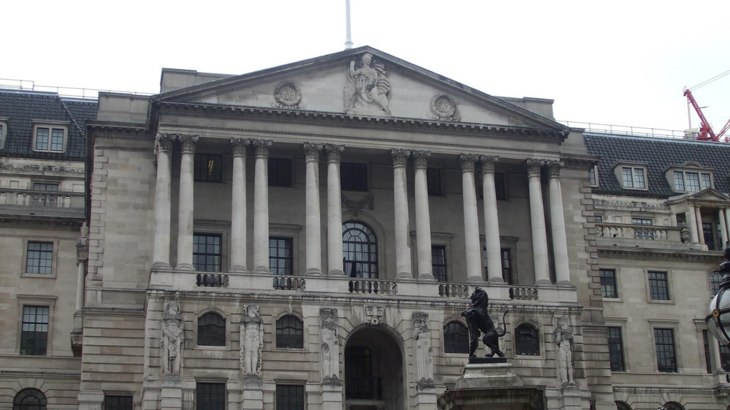
@Pixabay.
After weeks of concerning news about private credit, the Bank of England (BoE) has announced that it will test the sector's resilience, with the cooperation of the biggest US private credit groups: Blackstone, Apollo, and KKR.
According to the Financial Times, the BoE will examine leveraged loans, high-yield bonds, asset-backed finance, and private equity borrowing, as well as how the system would weather a crisis and the potential impacts on the wider economy.
Insurers have been particularly interested in the field in recent years, with many investing heavily. This, therefore, raises the question of whether they will be burned if the market fails the test.
After the notable failures of First Brands and Tricolor, many have begun to question insurers’ involvement in the private credit industry. Yet, those who are in the space are undoubtedly loyal, with many espousing their faith in it in a recent series of articles about the sector on Insurance Investor.
“An allocation to a low-risk Direct Lending strategy can come from either their Fixed Income bucket to provide a counterweight to a more volatile or higher-risk bond portfolio."
“[Private credit] has served us well and will remain the foundation of our investment strategy in the future,” said Mark Bickerstaffe, Portfolio Manager and Co-Head of Direct Lending in the Private Credit team at Hayfin, when discussing whether the recent scandals would turn investors away. But what explains the devotion?
According to Laura Vaughan, Head of Direct Lending at Federated Hermes, private credit can “offer low volatility, because it's not a marked market. It is valued quarterly, but based on bespoke valuation policies, which means, as markets spike and trough, the direct lending loans aren't impacted by the swings, so it provides stability in an overall portfolio.”
For insurers “seeking liability-matching income portfolios”, she continued, it is attractive due to the quarterly cash income flow.
“Also, an allocation to a low-risk Direct Lending strategy can come from either their Fixed Income bucket to provide a counterweight to a more volatile or higher-risk bond portfolio or from their alternatives bucket”, she said.
Taking this loyalty to the sector, as well as its recent headlines, it makes sense for the BoE to seriously scrutinise the sector. However, whether the outcome will be negative or positive could be a different story.
In 2023, the BoE identified concerns regarding the rapid growth of the field and the reliance on “highly indebted” businesses that heavily rely on the market for loans. Since then, the industry has only grown.
So, any BoE action will likely have a massive effect on the insurance industry. According to a recent article by Toby Nangle at the Financial Times, 35% of US insurers have private credit investments.
An action against the industry could cause: some capital flight from the industry as it might be deemed too risky, a higher administrative burden to report on lending, and increased capital requirements to match their private credit liabilities.
As such, the BoE is certain to do its due diligence in 2025, and if it finds serious flaws, insurers might be left in the lurch.
If the BoE found that the industry had serious flaws in 2023, action against the growing industry could be more likely.
While private industry is already popular in the US, it is increasingly so in Europe, which has been noted in a recent paper that weighed up European institutional investors' rapid adoption of private credit with some unease.
Fitch Ratings said it expected “European insurance companies and pension providers to keep growing their private asset exposures, which can incrementally increase credit, illiquidity and valuation risks, particularly when combined with less transparency than public markets.
“History demonstrates that systemic vulnerabilities often accumulate quietly,
only emerging after damage has occurred.”
“These risks are partly mitigated by the long duration of the liabilities that these assets are matching," it said, noting strong market mechanisms to prevent some issues. However, the paper was less circumspect in other areas: "Tie-ups between insurance firms and alternative investment managers will deepen, largely involving North American private credit lenders, which could result in complexity in group structures and misaligned incentives.”
The paper said it was likely that more in-depth exposure was likely in private credit throughout the European financial services market.
But for now, there is less exposure to the industry. Which might protect it from some volatility, but René Paulussen, Alternatives Leader at PwC Luxembourg, wrote on LinkedIn that asset managers need not shun the whole field. Instead, they “should undertake robust internal stress tests, examining leverage, structural complexity, liquidity, and underwriting practices".
Like Fitch, however, he raised ideas of some risk going unnoticed or disappearing through the cracks. “History demonstrates that systemic vulnerabilities often accumulate quietly, only emerging after damage has occurred," he said.
Europe, he offered, could even potentially avoid some of the volatility seen in the US by “embedding rigorous due diligence, forward-looking risk analysis, and transparent reporting into operations”.
While private credit may not be as ingrained in insurer portfolios in the UK and Europe as it is in the US, it is clearly of so much concern that the BoE is now getting involved.
Europe, with its strong risk frameworks and robust governance, is often construed as being safer from he type of credit event that could happen in the US; however, history tells us that shocks from the US usually reverberate in Europe.
For now, the industry on both sides of the Atlantic is still keen on the sector. But continued scrutiny of it is likely to keep piling up.